
Article: MiniMeis vs. Traditional Baby Carriers: What Parents Should Know

MiniMeis vs. Traditional Baby Carriers: What Parents Should Know
Scroll through any Singapore parenting group for more than a week and MiniMeis Singapore comes up in a carrier discussion sooner or later, usually alongside the same question: is a shoulder carrier actually better than the soft-structured carrier most parents already own, or is it a novelty that ends up in the storeroom after a few outings? The honest answer depends on your toddler's age, your typical outings, and what specifically is straining about your current carrying setup. This comparison breaks down the real differences so you can decide which fits your family.
What Makes MiniMeis Different
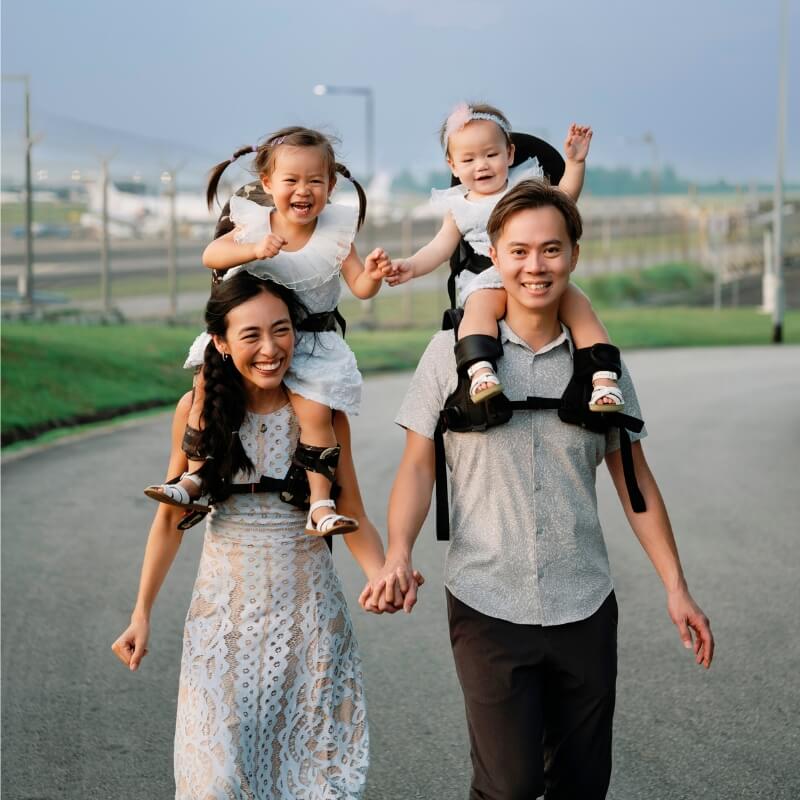
MiniMeis is a shoulder carrier — your toddler sits on your shoulders, secured by a harness system that clips around your torso, rather than against your chest or back the way a traditional soft-structured carrier works. The American Academy of Pediatrics notes that babywearing, in general, can support bonding and hands-free mobility for caregivers when done with correct positioning for the child's age and development. This changes the carrying experience in a few meaningful ways. Weight sits differently on your body, distributed through your shoulders and upper back rather than concentrated at your hips and lower back, which many parents with existing back strain find noticeably more comfortable for longer outings. Your toddler also gets a completely different vantage point — eye-level with adults, able to see over crowds — which tends to keep older babies and toddlers more engaged and less likely to ask to be put down or fuss for a change in position.
What Makes Traditional Carriers Different
Traditional soft-structured carriers keep your child against your body in a front, hip, or back carry, which offers more physical closeness and works from a much younger age than a shoulder carrier is designed for — most soft carriers can be used from birth or a few months old, while shoulder carriers like MiniMeis are built for babies who can already sit unsupported and hold their head steady, typically from around 6–7 months. Traditional carriers also tend to feel more secure to first-time users specifically because the child is contained within the carrier structure itself, rather than balanced on the shoulders with a harness, which can feel unfamiliar the first few times even though the harness system is designed to be fully secure.
Comfort and Weight Distribution

The International Hip Dysplasia Institute emphasises that carrier choice should account for a child's joint development at every stage, not just convenience. For toddlers in the 12kg–20kg range specifically, weight distribution becomes the deciding factor for many parents. A soft-structured carrier holding a heavier toddler against the front of your body shifts your centre of gravity forward, which can strain the lower back over a long outing — a shopping trip, a day at the zoo, a queue that runs longer than expected. A shoulder carrier distributes that same weight through your shoulders and upper back instead, which many parents describe as noticeably easier to sustain for hours rather than minutes, particularly once a toddler is too heavy for a front carry to remain comfortable.
Ease of Use
Traditional carriers generally have a shorter learning curve for the first few uses — buckle systems are broadly similar across most soft-structured carrier brands, so parents already familiar with baby carriers adapt quickly. A shoulder carrier introduces a genuinely new skill: getting your toddler up onto your shoulders safely while the carrier is already worn, and getting them back down again, both of which take a few practice attempts before feeling fully natural. Most parents report this initial adjustment period lasts only a handful of outings before it becomes routine, but it's a real difference worth setting expectations around before your first use.
Which Option Suits Which Family
If your child is under 6 months, a traditional soft-structured carrier or wrap is the only appropriate option, since shoulder carriers require a toddler who can already sit and hold their head steady independently. For toddlers from around 7 months through 3–4 years who are increasingly heavy and increasingly resistant to being confined in a front carry, a shoulder carrier often solves a specific pain point — the "I want to be carried but also want to see everything and move my legs" stage that frustrates a lot of parents using only a soft carrier at that age.
Families who travel frequently, navigate crowded transport, or spend significant time at outdoor events (National Day crowds, festivals, theme parks) often find a shoulder carrier earns its place quickly given how much ground it lets you cover without a stroller. Families whose primary use case is closer, calmer carrying — settling a fussy baby, breastfeeding while carrying, or shorter home-to-car outings — may find a traditional carrier remains the better everyday fit even once their toddler is old enough for a shoulder carrier.
Can You Use Both?
Many families end up owning both types rather than choosing one exclusively, using a soft-structured carrier for closer, calmer carrying at home or shorter errands, and switching to a shoulder carrier for longer outings, travel days, or crowded events once their toddler reaches the appropriate age and weight. This isn't an either-or decision for every family — it often comes down to matching the right tool to the specific outing rather than replacing one carrier type entirely with the other.
What Other Parents Say About the Switch
A common pattern in Singapore parenting communities is that families discover MiniMeis after their toddler has already outgrown comfortable use of a front-facing soft carrier, often somewhere between 15–18 months, when carrying while facing forward becomes both physically demanding and less enjoyable for a toddler who wants a clearer view of their surroundings. Parents who make the switch at that stage frequently describe it as solving a problem they'd assumed was simply "the toddler carrying phase being hard" rather than a fixable mismatch between carrier type and their child's current stage.
Frequently Asked Questions
At what age can my toddler start using a MiniMeis shoulder carrier?
MiniMeis carriers are designed for toddlers who can sit unsupported and hold their head steady independently, generally from around 6–7 months onward, through to roughly 20kg depending on the specific model.
Is a shoulder carrier safe for a wriggly toddler?
Yes, when used correctly — the harness system is designed to keep your toddler securely attached to your body even if they move or wriggle, unlike an unsecured "shoulder ride" without any harness.
Will my toddler outgrow a shoulder carrier faster than a soft-structured carrier?
Not necessarily — many shoulder carriers are rated up to around 20kg, which typically covers toddlers well past the age where a soft-structured front carry becomes uncomfortable for the parent to sustain.
Do I need to practice using a shoulder carrier before a big outing?
It's worth practicing the sit-up and dismount motions a few times at home first, since both parent and toddler benefit from getting comfortable with the new movement before relying on it during a longer outing.
Can a shoulder carrier replace a stroller entirely?
For many families it can, particularly for crowded venues or uneven terrain where strollers are impractical, though most parents still find a stroller useful for longer walks or when a toddler wants to nap during the outing.
Final Thoughts
Whether MiniMeis suits your family better than a traditional soft-structured carrier depends mainly on your toddler's age and the kind of outings you do most often — and for many Singapore families with an older, heavier toddler, it solves a real carrying pain point rather than being a novelty purchase. Browse our MiniMeis collection to see the full range, or explore SavvyMamaSG for our complete range of baby and mummy essentials.
Ready to make carrying easier? Shop MiniMeis shoulder carriers now.
REFERENCES:
1. American Academy of Pediatrics. (2023). Babywearing: Benefits and Safety Guidelines. HealthyChildren.org. https://www.healthychildren.org/English/family-life/family-dynamics/Pages/Baby-Wearing.aspx
2. International Hip Dysplasia Institute. (2024). Healthy Hip Positioning in Baby Carriers. IHDI. https://hipdysplasia.org/baby-carriers-swaddling-and-hip-dysplasia/


Leave a comment
This site is protected by hCaptcha and the hCaptcha Privacy Policy and Terms of Service apply.